History of the Building
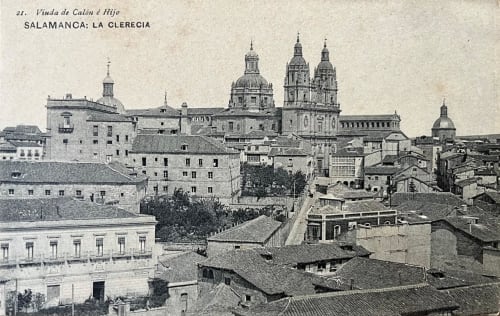
Historic Salamanca cityscape showing Cathedral and medieval architecture, MoneoHeritage hotel location
The building that houses the facilities and units of the MoneoHeritage tourist accommodation is an eclectic construction from the early 20th century. Belonging to the modernist movement of the time, this building is linked to many of the most distinctive structures of European Romanticism in Salamanca.
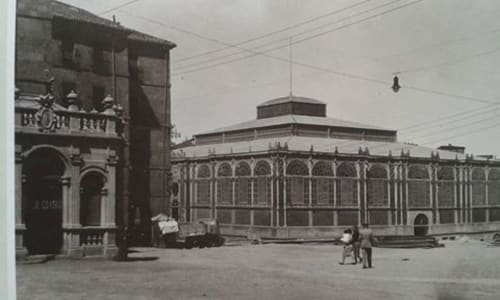
Historic plaza in Salamanca with ornate Renaissance architecture buildings and period figures


The modernist currents that developed in late 19th and early 20th-century Europe left their mark on Salamanca through the Fundición Moneo y Cía., a company once owned by the builders and residents of this building. Fundición Moneo y Cía. played a crucial role in the significant development of provincial Salamanca in the turn-of-the-century period, being the precursor to such emblematic works as the Central Market and Casa Lis, two of the city’s most iconic examples of iron architecture and modernist design.
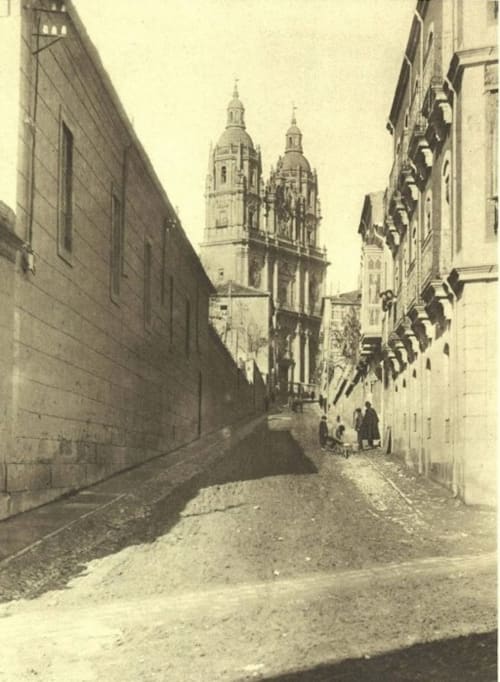
Historic narrow street in Salamanca leading to cathedral with twin towers and classical architecture


Other notable works, such as the current Museo del Molino (formerly a flour mill in the south) or the Glorieta Bullring, were not only built by Fundición Moneo y Cía. but also designed by the architect Cecilio González Domingo, the same architect who designed this eclectic building in 1905. This modernist site, which now houses MoneoHeritage, is therefore a fundamental part of Salamanca's industrial transformation history, allowing visitors to immerse themselves in an era charged with significant events, such as the arrival of the railway, the establishment of industries, the appearance of automobiles, and the early social conflicts brought on by the Industrial Revolution.


This period was filled with social events, weddings, new trends, and, above all, elegant attire for ladies and gentlemen, lively discussions in literary cafés and social circles.


These gatherings saw the growth and debates of notable figures such as Miguel de Unamuno and Inés Luna Terrero (a feminist, modernist, and tireless traveller who was the lover of Primo de Rivera), as well as the Moneo family themselves, who, alongside the Mirat family, were relentless industrialists trained in France and participated in many of the most prominent social events of the time.


From introducing electricity and engines into Salamanca's industries to the establishment of the railway, they were tirelessly involved in the creation of the Chamber of Commerce, the organisation of several international fairs, and participation in many others, such as the 1889 Paris Exposition, famous for the installation of the Eiffel Tower, along with countless other events from this fascinating era, which remains so special in our modern eyes.